Holiday Elegance: Makeup Tips for People Who Are Blind or With Vision Loss
The holiday season is usually a busy time for family reunions, office parties, and receptions with friends. Many will have at least one or two opportunities to dress up in their 36s during the celebratory season. Being blind or living with vision loss doesn't mean you have to deny yourself the opportunity to make yourself beautiful!
The art of makeup can intimidate some people who are blind or living with vision loss, but it can be otherwise! With the help of a few simple tips and tricks, anyone can hone their makeup application skills whether they are seen or not.
The base
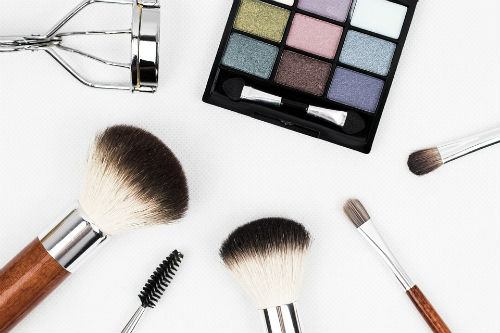
If you don't have makeup products, you will obviously need to get some. First choose a few basics like foundation or powder, lipstick, mascara and a small eye shadow palette. It is also advisable to buy makeup removing wipes at the same time. If you make an application mistake, you can just wipe off the makeup and try again.
Ask someone you trust to walk with you to the cosmetics counter to help you choose the colors that are right for you. You can also seek help from the cosmetic consultant. Don't be shy: it's his job! Start with subtlety. Choose lighter, more natural shades that will lessen application errors, if they occur. When you gain confidence, you can be more daring in the choice of colors.
When you return home with your products, it is important to quickly identify them so that you can recognize them later. The more cosmetics you buy, the more necessary this step is, as similar products can feel the same to the touch. Use braille labels, tactile dots, or any other tactile indicator that works for you. For an inexpensive solution, you can even surround your products with elastic bands in varying numbers.
Apply your makeup impeccably
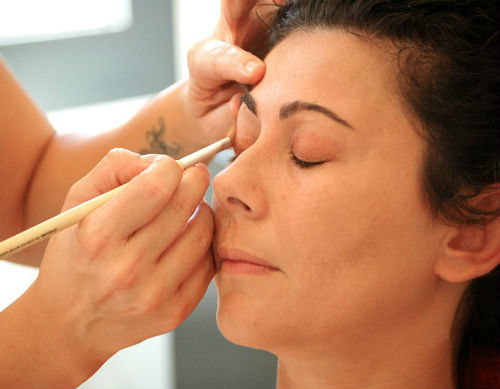
Now that you've purchased and identified your products, it's time to have fun applying your makeup. As in everything, it is by forging that one becomes a blacksmith! So don't be discouraged if you have difficulty at the beginning; you will improve over time.
If you've never applied makeup before, consider hosting a “makeup night” with someone you trust. Have fun! You can order a pizza, listen to your favorite music and even sip a nice glass of wine, but beware of overflows: you will need skill and sure gestures! Ask your friend to put on makeup, explaining to you what he or she does. This will give you an idea of the sensation associated with the different stages. Using makeup removing wipes, then wipe off the applied makeup and try the application yourself.
As you turn on the makeup, your friend can encourage you and guide you as you go. Ask him questions like: "What's the deal?" Is it too dark? Too pale? »After finishing the application, remove the makeup again and repeat the process. It is by exercising that you will improve your skills. In people with vision loss, the assured application of makeup relies on repetition and muscle memory. Practice as much as you can.
Advice for each facial feature
The face :
 There are plenty of products designed to make your skin look flawless, including concealers, makeup bases, highlighter, and contouring palettes, but you can start with a simple foundation and loose powder. These two products work well together (i.e., you can apply a thin layer of foundation all over your face and set it in with powder), but if you don't are not comfortable trying on foundation, just use loose powder first.
- If you go for a foundation, blend it well to avoid creating streaks or lines on your face. Some people who are blind prefer to use their fingers to blend the foundation, as this helps them feel the product better on their face. Others recommend using a makeup sponge or blending brush instead. In any case, apply the product carefully, taking care to blend it well at the junction of the face and neck to avoid the appearance of a mask.
- Blush is an easy way to brighten up your complexion. Plus, as long as you don't choose a shade that's too dark, it's hard to go wrong, even for a beginner. The biggest mistake people make when applying blush is using a brush that is too small (often the one that comes with the blush palette), which can leave a too sharp line on the cheeks. It is advisable to invest instead in a large flexible brush which will allow an even application and a more natural effect. It is not necessary to buy a very expensive brush; buying a $ 5 or $ 6 brush will be well worth it.
Eyebrows :
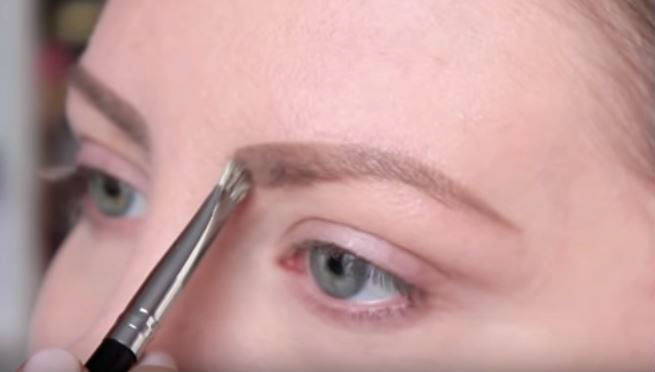 It is much easier to use an eyebrow pencil if your eyebrows are well defined. If not, consider periodic waxing or threading. You can also use tweezers if you are comfortable doing so.
- An eyebrow stencil can help you achieve a well-defined shape when you make up these with an eyebrow pencil.
- Using the eyebrow pencil, use small, light strokes to gradually add color to your brows. Apply the color evenly to the entire eyebrow to prevent an uneven result.
The eyes :
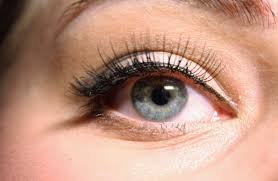 An unsuspected amount of oil is deposited on our eyelids, which can cause makeup to run off or encourage lumps to form throughout the day. This oil can also cause the transfer of the eyeliner applied to the upper part of the eyelid. Obviously, if you are blind or have vision loss, you will not be able to tell if this is happening. Therefore, it is advisable to dab some loose powder on your eyelids before applying makeup to your eyes. This will prevent oil from forming on your eyelids and your makeup will stay in place.
- To make it easier to apply eye shadow, use an eye shadow brush rather than the padded applicator that comes with the palette. Make the gesture of covering your entire eyelid with shadow, but apply more lightly just above the crease of your eyelid. This will make the transition from shade to your skin tone smoother. After applying the eye shadow, clean the brush to remove all traces of the product and iron over your eyelid to blend the color. A good rule of thumb for applying any type of makeup is to always blend the product well.
- If you want to try an eyeliner, avoid liquid eyeliner or eye pencils (especially if you are new to makeup) as these can be difficult to master for someone who is blind or has vision loss. . Instead, use a retractable pencil that you never need to sharpen; this glides easily on the skin and will not smudge like it can with a liquid liner. Instead of black, start with a lighter shade such as charcoal or brown that will show less blemishes in the application. It is advisable to apply your eyeliner after your eye shadow so that the latter does not cover the line you have drawn.
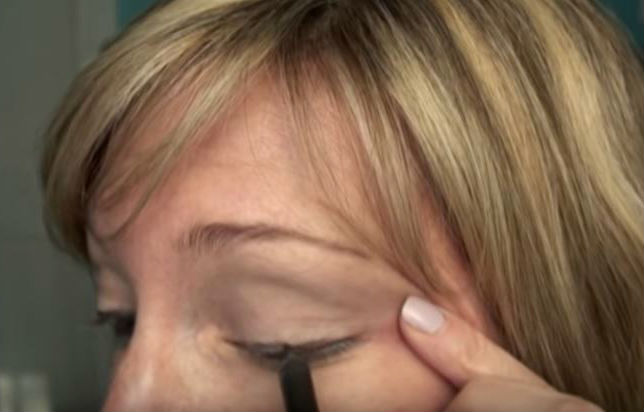 To apply the eyeliner, close your eye or try to look downward. Using your non-dominant hand, then straighten your eyelid to help the eyeliner glide easily over your skin. (Just place a finger just next to the outer edge of the eye and gently stretch the skin towards the ear.) Hold the liner horizontal at the base of the lashes; you will be very close to the base of the eyelashes and the eyeliner will slide more easily on the eyelid. Place the tip of the tracer at the outer corner of the eye. Then gently slide the eyeliner along the base of the eyelashes towards the inner corner of the eye, without going all the way to the tear duct. The goal is to accentuate the outer corners and not the inner corners of the eyes. As you slide the eyeliner along the lash line, decrease the application force so that the line gradually fades towards the inner corner of the eyelid instead of ending too abruptly. (Note: Eye liner is one of the most difficult products to master, even for people with normal vision. It is advisable to perfect this technique with the help of a trusted person who can see. don't be discouraged if you have a hard time; few people get it right the first time!) It is advisable to perfect this technique with the help of a trusted person who can see. Don't be discouraged if you have difficulty; few people get it right the first time!) It is advisable to perfect this technique with the help of a trusted person who can see. Don't be discouraged if you have difficulty; few people get it right the first time!)
- When applying mascara, it is advisable to put a piece of tissue paper under your eyes before applying. This will prevent you from staining your cheeks accidentally. Open your eyes as wide as possible (people generally find it helpful to open their mouths at the same time) and slide the mascara brush from the base to the tips of the lashes. It will probably take two or three passes to cover all of your lashes, from the inner corner to the outer corner of the eye. Some people add a touch of mascara to the lower lashes, but that's at your discretion.
The lips :
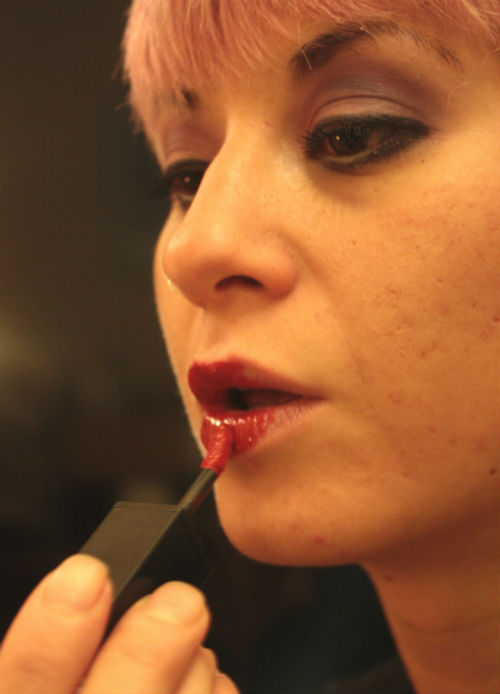 If you're not yet ready to experiment with lipstick, go for a tinted lip gloss. This will give your lips a pretty shade without having to worry about applying it perfectly inside the lip contour.
- Besides, it's not the end of the world if you go beyond the lip contour a little. Many women intentionally apply their lipstick a bit beyond the natural contour of their lips to give them a fuller appearance. If you go over it a little, don't worry too much; just try to pass evenly.
- A good way to make sure the color is evenly distributed on your lips is to press them together gently after application.
- After applying lipstick, insert your index finger into your mouth, gently close your lips around it, then lift your finger out. This technique will help remove any excess lipstick and, most importantly, ensure that you don't get any on your teeth.
It's your turn! Now is the time to enhance your look by experimenting with makeup. However, remember that makeup should be an enjoyable experience with the goal of feeling good about yourself. If you're not enjoying it and you don't feel comfortable, there is no point in trying! After all, you are already great naturally.

Comments
Post a Comment